
IRS Raises Standard Mileage Rates Midyear — What You Need to Know
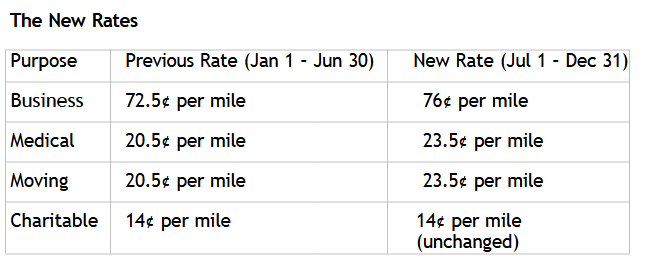
The IRS has announced a midyear bump to the standard mileage rates for business, medical, and moving travel, retroactively effective to July 1, 2026. The adjustment, issued in IRS Announcement 2026-11, allows for recent increases in fuel prices and applies to all qualifying travel on or after July1st, 2026.
Why a Midyear Change?
The IRS typically sets mileage rates once a year. However, when fuel costs shift significantly during the year, the agency may step in with an interim adjustment. That’s exactly what happened here — rising gas prices prompted the IRS to revise rates upward at the halfway mark.
Who Can Use These Rates?
Business mileage: Taxpayers who use a personal vehicle for business purposes can apply the standard mileage rate instead of tracking actual expenses like depreciation, lease payments, gas, and oil separately.
Medical mileage: The medical rate covers travel that is primarily for — and essential to — obtaining medical care under Code § 213. Only variable costs (like fuel) are factored into this rate, which is why it’s lower than the business rate. Parking fees and tolls related to medical travel may be deducted separately.
Moving mileage: The moving expense deduction is currently limited to active-duty members of the Armed Forces and members of the intelligence community under Code § 217. The same rate and logic as medical mileage applies.
Charitable mileage: The rate for charitable driving remains fixed at 14 cents per mile by statute and is not subject to IRS adjustment.
A Note on Employee Benefits
Transportation expenses that qualify as deductible medical costs can generally be reimbursed tax-free through a health FSA, HRA, or HSA. Keep in mind that the reimbursement rate that applies is the one in effect when the expense was incurred — so travel before July 1 uses the old rate, and travel on or after July 1 uses the new one. Some employers may exclude medical transportation from reimbursable expenses for administrative simplicity.
What to Do Now
If you or your clients track mileage for tax purposes, make sure your records reflect the rate change as of July 1. Mileage logs should clearly distinguish between first-half and second-half travel to ensure accurate deductions at filing time.
For full details on the rules governing standard mileage rates, see Revenue Procedure 2019-46.
